

The Hidden Risks of Retractable Leashes
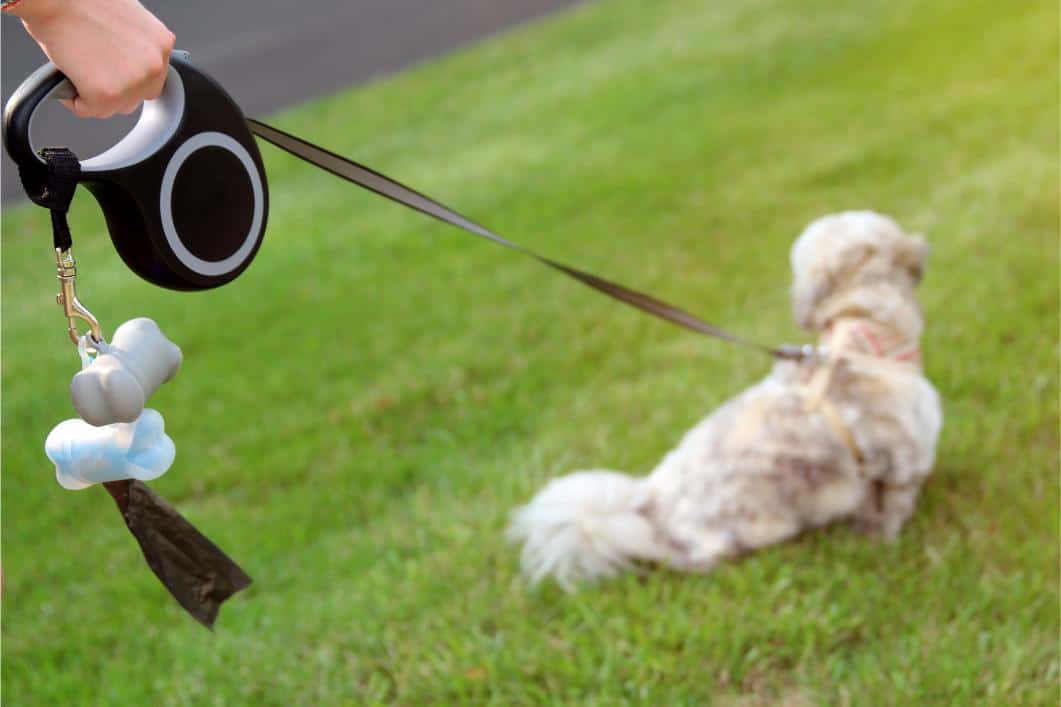
Retractable leashes seem like the ideal solution for pet parents who love to let their dogs wander. It’s almost like being off-leash, yet you can reel your pet back in whenever you need to. But there are specific things you should know about retractable leash safety, and the team at Caring Paws Animal Hospital is here to share them.
The Risks of Using a Retractable Leash
While they’re tantalizingly convenient, retractable leashes can pose real risks to both pets and the people walking them. Retractable leashes reduce the walker’s control and can increase the likelihood of an injury.
This is partly because, when being walked with a retractable leash, dogs can move far ahead of their handler and bump into hazards before the human in charge of them can react.
Here are the 4 top risks of using a retractable leash to walk your dog.
1. They Reduce the Dog-Walker’s Control
Retractable leashes can extend up to 10-20 feet, or even longer, which greatly reduces your ability to manage your dog’s behavior. You can’t keep him out of the road when a car comes if he’s 20 feet ahead of you and wandering happily across both sides of the street.
You also can’t keep an aggressive animal from attacking your dog if both your pup and the other animal are 10 feet away from you. If your dog is 15 feet in front of you and notices a puddle of liquid and starts licking it up, you can’t get there in time to stop her.
One of the main reasons you keep your dog on a leash is to keep her safe from potential risks. A retractable leash inhibits this purpose.
2. They Increase the Risk of Injury to Both People and Pets
A retractable leash has a thin, snappy cord. The very nature of its retractability means that there’s tension in that leash—and if something goes wrong, the leash can snap out of control and whip the human or dog using it. Rope burns, cuts, and hand trauma in humans can all result from these so-called convenient leashes.
That’s not all. If your pet runs far out ahead of you and stops suddenly—or you suddenly jerk them back in an effort to get them under control—their neck can get strained.
3. There’s Always a Risk of Equipment Failure
Retractable leashes rely on internal locking mechanisms that can wear down over time or simply fail to function properly. In theory, the holder of the leash can push down on a button to apply brakes on the leash and bring the dog under control.
But if this braking system doesn’t properly engage, the dog might continue to run into an unsafe situation. The leash might rip out of the walker’s hand, and allow the dog to run off into who-knows-where.
4. They Can Encourage Dogs to Pull
Ah, the old pull of a dog who wants to explore and is limited to a shorter leash. Which of us hasn’t felt this exasperating (yet understandable) pull? It takes dedication and training to teach a dog to walk without pulling.
A retractable leash can unravel all the good habits you’ve tried to show your dog over the years. Dogs are smart, after all, and they’ll eventually learn that the leash they’re on can extend, giving them greater freedom, if only they pull hard enough.
Safer Alternatives for Walking Your Pet
Boring though they may be, those standard, 4-6-foot leashes offer the best control and communication for you and your dog. Pair this leash with a harness to reduce the strain on your pet’s neck. Walking your pet in Odessa should be a joy, and with a short leash, it can be.
If you need support for your Odessa pet’s pulling behavior, the team at Caring Paws Animal Hospital can help. Call us at (813) 723-7297 to set up an appointment with our experienced team.